
Back in 2009 I started posting a summary at the end of the year of what I read during the year and people enjoy it so I did it every year afterward until 2019 and then restarted for 2023 (see 2009, 2010, 2011, 2012, 2013, 2014, 2015, 2016, 2017, 2018, 2019, 2023 , 2024– a ton of amazing books in those posts to tempt you!).
For 2024 I set a goal of hitting 100 books – so with *157* books this year, success! 100 will be my goal for 2026 as well.
For the record, I mostly read ‘real’ books – i.e. not in electronic form – I really don’t like reading off a screen. Yes, I’ve seen electronic readers – we both have iPads – but I don’t like reading electronically. Having said that, I do listen to a lot of books using Audible as I drive or when doing low-concentration jobs at Camp Savage – more than 1/3 of this year’s total were audio books. I also don’t ‘speed read’ – I read quickly and make lots of time for reading, and I listen at 1.4-1.5x narration speed.
Check It Out!
Why do I track metrics? Because I like doing it, and being able to compare against previous years. Some people don’t understand the logic in that – each to their own :-)
I thought picking my top book of the year would be easy – Gone With the Wind by Margaret Mitchell – an absolutely fabulous book that I can’t believe I hadn’t read before. However, just ten books later, I read the incredible Team of Rivals: The Political Genius of Abraham Lincoln by Doris Kearns Goodwin and knew I wouldn’t be able to choose between them, They’re both huge books, Pulitzer Prize winners, and deal with the same period of history. So there you are – a top-2 for 2025.
Now the details. I enjoy putting this together (takes 3-4 hours) as it will also serve as a record for me many years from now. I hope you get inspired to try some of these books – push yourself with new authors and very often you’ll be surprisingly pleased. Don’t forget to check out the previous year’s blog posts for more inspiration too.
As usual I leave you with a quote that describes a big part of my psychological make-up:
In omnibus requiem quaesivi, et nusquam inveni nisi in angulo cum libro!
Analysis of What I Read
(During which I learned to use Excel pivot tables!)
I read 52,009 pages, which is an average of 142.5 pages a day, and 20,000+ more than almost every other year. The chart below shows the number of pages (y-axis) in each book I read (x-axis).

The average book length was 331 pages, which is below average for me, because I read 38 of the mini-books from the Penguin Little Black Classics boxed set (you can see the trend line at around 55 pages that continues until just after book #100).
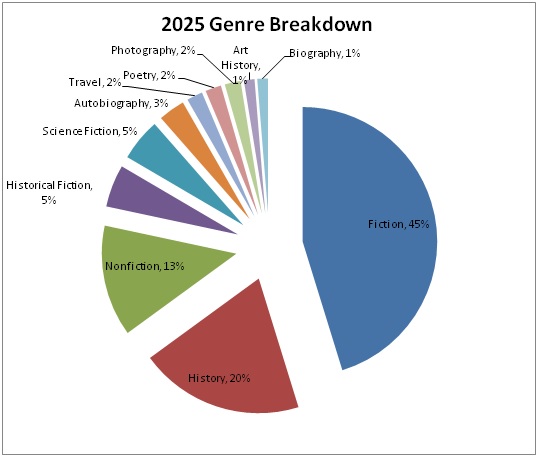
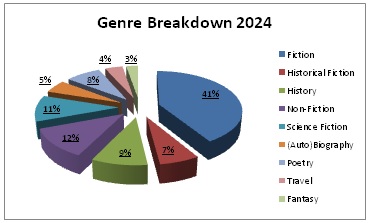
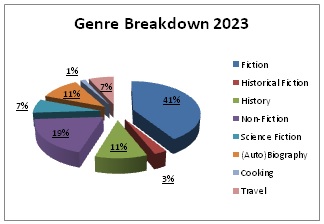
The genre breakdown is pretty similar to previous years, with more hard history, especially around the Cold War and WWII.
The Top 10, I mean 16
I read a lot of excellent books this year and once again I couldn’t whittle it down to a top-10, especially as I read 157, so here is my top 16. If you don’t read much, at least consider looking at some of these in 2025. It’s impossible to put them into a priority order so I’ve listed them in the order I read them, along with the short Facebook review I wrote at the time.
 #2; Abraham Verghese; 736pp; Fiction; January 5 (I bought this in 2012 and decided to listen to it instead after listening to Gone With the Wind (set in the same time). Fantastically interesting book about Lincoln, his nomination, his cabinet, and his prosecution of the Civil War. An amazing politician and juggler of political rivals. Highly, highly recommended! PS I’ve already picked up The Bully Pulpit on Audible to listen to as well.)
 #5; Natasha Pulley; 448pp; Historical Fiction; January 12 (Very clever novel that I can’t say much more about without giving away the various twists. From Amazon: “Joe Tournier has a bad case of amnesia. His first memory is of stepping off a train in the nineteenth-century French colony of England. The only clue Joe has about his identity is a century-old postcard of a Scottish lighthouse that arrives in London the same month he does. Written in illegal English―instead of French―the postcard is signed only with the letter “M,” but Joe is certain whoever wrote it knows him far better than he currently knows himself, and he’s determined to find the writer. The search for M, though, will drive Joe from French-ruled London to rebel-owned Scotland and finally onto the battle ships of a lost empire’s Royal Navy. Swept out to sea with a hardened British sea captain named Kite, who might know more about Joe’s past than he’s willing to let on, Joe will remake history, and himself.” Highly recommended!)
 #12; Neil MacGregor; 736pp; History; January 25 (This has to be the record for the longest time it’s taken me between starting and finishing a book – I bought and started it in March 2012! Some years I didn’t read any of it, and this year I’ve plowed through the last 50 objects. It’s a stunning book, written by the directory of the British Museum in London – easily my favorite museum. Every time I open it I’m reminded of my good friends Jonathan Kehayias and Joe Sack, who I took to the museum in 2012 and bought them a copy each as a memento of our friendship. Highly, highly recommended! From Amazon: “The history of humanity is a history of invention and innovation, as we have continually created new items to use, to admire, or to leave our mark on the world. In this original and thought-provoking book, Neil MacGregor, director of the British Museum, has selected one hundred man-made artifacts, each of which gives us an intimate glimpse of an unexpected turning point in human civilization. A History of the World in 100 Objects stretches back two million years and covers the globe. From the very first hand axe to the ubiquitous credit card, each item has a story to tell; together they relate the larger history of mankind-revealing who we are by looking at what we have made.”)
 #26; Jennifer Pahlka; 321pp; Nonfiction; March 13 (Excellent book explaining why our government at all levels tends to be terrible at IT projects. Highly recommended. From Amazon: “Just when we most need our government to work―to decarbonize our infrastructure and economy, to help the vulnerable through a pandemic, to defend ourselves against global threats―it is faltering. Government at all levels has limped into the digital age, offering online services that can feel even more cumbersome than the paperwork that preceded them and widening the gap between the policy outcomes we intend and what we get. But it’s not more money or more tech we need. Government is hamstrung by a rigid, industrial-era culture, in which elites dictate policy from on high, disconnected from and too often disdainful of the details of implementation. Lofty goals morph unrecognizably as they cascade through a complex hierarchy. But there is an approach taking hold that keeps pace with today’s world and reclaims government for the people it is supposed to serve. Jennifer Pahlka shows why we must stop trying to move the government we have today onto new technology and instead consider what it would mean to truly recode American government.”)
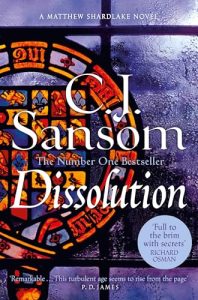 #76; C.J. Sansom; 443pp; Historical Fiction; June 26 (One evening while I was at hospice in St Andrews I stepped out for a while and hit up the only open bookshop in the evening, Turns out it specializes in detective novels, which is the genre I’m into this year. Picked up the first two books in the Shardlake series, set in the 1540s in England, so combining ‘police’ procedurals with historical fiction. Wonderful stuff! Now have the whole set to take back to the US with me. Highly recommended!)
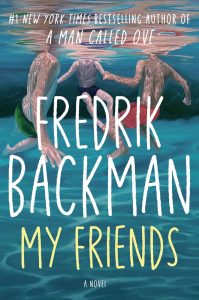 #96; Fredrik Backman; 448pp; Fiction; August 15 (Kimberly bought it after a friend posted about it and I noticed it sitting unfulfilled, so I stole it to quickly read first. And I’m glad I took a chance on it – it’s excellent – one of my favorite books this year – highly recommended!)
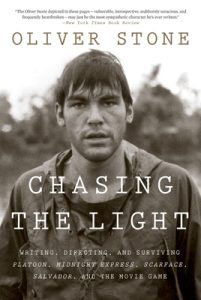 #97; Oliver Stone; 352pp; Autobiography; August 21 (I found Stone’s book incredibly interesting, both about his growth through early successes and failures, and the intricacies of movie financing, production, and post-production. From Amazon: “Before the international success of Platoon in 1986, Oliver Stone had been wounded as an infantryman in Vietnam, and spent years writing unproduced scripts while driving taxis in New York, finally venturing westward to Los Angeles and a new life. Stone, now 73, recounts those formative years with in-the-moment details of the high and low moments: We see meetings with Al Pacino over Stone’s scripts for Scarface, Platoon, and Born on the Fourth of July; the harrowing demon of cocaine addiction following the failure of his first feature, The Hand (starring Michael Caine); his risky on-the-ground research of Miami drug cartels for Scarface; his stormy relationship with The Deer Hunter director Michael Cimino; the breathless hustles to finance the acclaimed and divisive Salvador; and tensions behind the scenes of his first Academy Award–winning film, Midnight Express.” Highly recommended!)
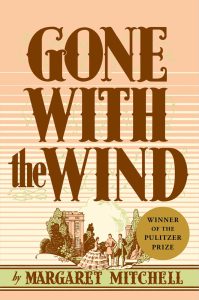 #100; Margaret Mitchell; 960pp; Fiction; August 23 (Just finished listening to book #100 this year! Third time ever (100 in 2009, 101 in 2018) and I’m less than 3/4 through the year! It’s quite amazing that I’ve never read this or seen the movie, so I had only the barest notion of what it was about (not having been educated in the US). What a superb story! I have the authorized sequel, Scarlett, to listen to in September after Team of Rivals. Highly, highly recommended!)
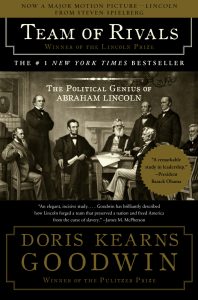 #110; Doris Kearns Goodwin; 944pp; History; September 8 (I bought this in 2012 and decided to listen to it instead after listening to Gone With the Wind (set in the same time). Fantastically interesting book about Lincoln, his nomination, his cabinet, and his prosecution of the Civil War. An amazing politician and juggler of political rivals. Highly, highly recommended! PS I’ve already picked up The Bully Pulpit on Audible to listen to as well.)
 #114; Kim Stanley Robinson; 615pp; Science Fiction; September 17 (Robinson’s Mars trilogy (Red/Green/Blue Mars) is one of my favorite near-future sci-fi sets, and this is the third time I’ve read Red Mars (last time was 2013) – this time I’ll read #2 and #3 for the second time. Highly, highly recommended! From Amazon: “For centuries, the barren, desolate landscape of the red planet has beckoned to humankind. Now a group of one hundred colonists begins a mission whose ultimate goal is to transform Mars into a more Earthlike planet. They will place giant satellite mirrors in Martian orbit to reflect light onto its surface. Black dust sprinkled on the polar caps will capture warmth and melt the ice. And massive tunnels drilled into the mantle will create stupendous vents of hot gases. But despite these ambitious goals, there are some who would fight to the death to prevent Mars from ever being changed.”)
 #120; Peter Hart; 544pp; History; September 26 (An excellent book, filled with quotes from all ranks from privates to field marshalls, exploring all the fronts, major battles, and commanders. Highly recommended! From Amazon: “In The Great War, Peter Hart provides a masterful combat history of this global conflict. Focusing on the decisive engagements, Hart explores the immense challenges faced by the commanders on all sides. He surveys the belligerent nations, analyzing their strengths, weaknesses, and strategic imperatives. Russia, for example, was obsessed with securing an exit from the Black Sea, while France–having lost to Prussia in 1871, before Germany united–constructed a network of defensive alliances, even as it held a grudge over the loss of Alsace-Lorraine. Hart offers deft portraits of the commanders, the prewar plans, and the unexpected obstacles and setbacks that upended the initial operations.”)
 #126; Kenneth Whyte; 752pp; Biography; October 8 (As part of learning more about US history, I’m reading bios of presidents from Hoover onward. This is an excellent biography of a complicated man, and I learned a ton about the world in his time too, and I had no idea about the massive relief effort he ran in WWI. Highly recommended! From Amazon: “An impoverished orphan who built a fortune. A great humanitarian. A president elected in a landslide and then resoundingly defeated four years later. Arguably the father of both New Deal liberalism and modern conservatism, Herbert Hoover lived one of the most extraordinary American lives of the twentieth century. Yet however astonishing, his accomplishments are often eclipsed by the perception that Hoover was inept and heartless in the face of the Great Depression. Now, Kenneth Whyte vividly recreates Hoover’s rich and dramatic life in all its complex glory. He follows Hoover through his Iowa boyhood, his cutthroat business career, his brilliant rescue of millions of lives during World War I and the 1927 Mississippi floods, his misconstrued presidency, his defeat at the hands of a ruthless Franklin Roosevelt, his devastating years in the political wilderness, his return to grace as Truman’s emissary to help European refugees after World War II, and his final vindication in the days of Kennedy’s “New Frontier. Ultimately, Whyte brings to light Hoover’s complexities and contradictions—his modesty and ambition, his ruthlessness and extreme generosity—as well as his profound political legacy. Hoover: An Extraordinary Life in Extraordinary Times is the epic, poignant story of the deprived boy who, through force of will, made himself the most accomplished figure in the land, and who experienced a range of achievements and failures unmatched by any American of his, or perhaps any, era. Here, for the first time, is the definitive biography that fully captures the colossal scale of Hoover’s momentous life and volatile times.”)
 #143; Wilkie Collins; 390pp; Fiction; November 4 (Another excellent Wilkie Collins novel, renowned as his masterpiece and one of the best novels of the 19th century: a mid-1800s mystery told in the style of multiple narratives around the same happenings. The style reminds me of Iain Pears’ An Instance of the Fingerpost, which I should read again. Highly recommended!)
 #144; Irvine Welsh; 288pp; Fiction; November 5 (I haven’t read a Welsh book for almost 10 years and didn’t know he’d written two more follow-ons to Trainspotting, this one centered on Begbie. Fabulous stuff – he’s one of my favorite authors – highly recommended for Welsh fans!)
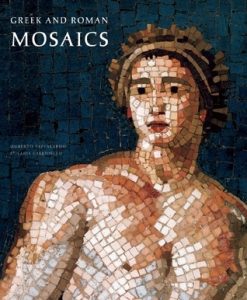 #155; Umberto Papparlardo; 320pp; Art History; December 19 (I absolutely love ancient mosaics, for their clever intricacy and classical subjects, and I’ve been working through this fabulous coffee-table book over the last few years. Of particular interest to me are the mosaics in Pompeii, some of which I saw in person when I was there in July 1996. Excellent!)
 #157; Caleb Carr; 512pp; Historical Fiction; December 30 (An excellent psychological why-dunnit and who-dunnit, set in 1896 New York, about solving a series of horrific murders of young boy-prostitutes. No, I haven’t seen the TV show. Highly recommended! From Amazon: “The year is 1896. The city is New York. Newspaper reporter John Schuyler Moore is summoned by his friend Dr. Laszlo Kreizler—a psychologist, or “alienist”—to view the horribly mutilated body of an adolescent boy abandoned on the unfinished Williamsburg Bridge. From there the two embark on a revolutionary effort in criminology: creating a psychological profile of the perpetrator based on the details of his crimes. Their dangerous quest takes them into the tortured past and twisted mind of a murderer who will kill again before their hunt is over. Fast-paced and riveting, infused with historical detail, The Alienist conjures up Gilded Age New York, with its tenements and mansions, corrupt cops and flamboyant gangsters, shining opera houses and seamy gin mills. It is an age in which questioning society’s belief that all killers are born, not made, could have unexpected and fatal consequences.”)
The Complete List
And the complete list, with links to Amazon so you can explore further. One thing to bear in mind, the dates I finished reading the book don’t mean that I started, for instance, book #2 after finishing book #1. I usually have anywhere from 15-25 books on the go at any one time so I can dip into whatever my mood is for that day. Some books I read start to finish without picking up another one and some books take me over a year. Enjoy!
- Life On Svalbard; Cecilia Blomdahl; 240pp; Nonfiction; January 4
- The Covenant of Water; Abraham Verghese; 736pp; Fiction; January 5
- The Red Circle; Brandon Webb; 416pp; Nonfiction; January 6
- Borges and Me: An Encounter; Jay Parini; 320pp; Nonfiction; January 9
- The Kingdoms; Natasha Pulley; 448pp; Historical Fiction; January 12
- The Marshall Plan: Dawn of the Cold War; Benn Steil; 608pp; History; January 17
- The Maltese Falcon: Art of Innovation; Various; 234pp; Photography; January 19
- Two on a Tower; Thomas Hardy; 336pp; Fiction; January 21
- War; Bob Woodward; 448pp; Nonfiction; January 23
- The Tell-Tale Heart; Edgar Allan Poe; 48pp; Fiction; January 23
- A Hippo Banquet; Mary Kingsley; 52pp; Travel; January 25
- A History of the World in 100 Objects; Neil MacGregor; 736pp; History; January 25
- The Beautifull Cassandra; Jane Austen; 55pp; Fiction; January 26
- Outposts: Journeys to the Surviving Relics of the British Empire; Simon Winchester; 362pp; Travel; January 28
- Gooseberries; Anton Chekhov; 56pp; Fiction; January 29
- Lockheed SR-71 Blackbird: Owner’s Workshop Manual; Steve Davies & Paul F. Crickmore; 160pp; Nonfiction; January 29
- The Kitchen House; Kathleen Grissom; 384pp; Historical Fiction; January 31
- Sketchy, Doubtful, Incomplete Jottings; Johann Goethe; 56pp; Nonfiction; February 7
- The Great Winglebury Duel; Charles Dickens; 56pp; Fiction; February 10
- What an Owl Knows; Jennifer Ackerman; 352pp; Nonfiction; February 11
- The Maldive Shark; Herman Melville; 56pp; Fiction; February 15
- Dopamine Nation: Finding Balance in the Age of Indulgence; Anna Lembke; 304pp; Nonfiction; February 19
- The Old Nurse’s Story; Elizabeth Gaskell; 52pp; Fiction; February 21
- Death’s End; Cixin Liu; 624pp; Science Fiction; March 11
- The Serviceberry; Robin Wall Kimmerer; 112pp; Nonfiction; March 12
- Recoding America; Jennifer Pahlka; 321pp; Nonfiction; March 13
- The Steel Flea; Nikolay Leskov; 52pp; Fiction; March 13
- Dead Water; Ann Cleeves; 416pp; Fiction; March 20
- Our Mutual Friend; Charles Dickens; 797pp; Fiction; March 22; 2023
- Thin Air; Ann Cleeves; 389pp; Fiction; March 27
- Gathering Moss: A Natural And Cultural History Of Mosses; Robin Wall Kimmerer; 168pp; Nonfiction; March 29
- The Atheist’s Mass; Honore de Balzac; 50pp; Fiction; March 30; 2029
- The Silmarillion; J.R.R. Tolkien; 450pp; Fiction; April 1
- Black Butterflies; Priscilla Morris; 288pp; Fiction; April 5
- Knots and Crosses; Ian Rankin; 272pp; Fiction; April 9
- The Yellow Wall-Paper; Charlotte Perkins Gilman; 54pp; Fiction; April 14
- Burma Sahib; Paul Theroux; 400pp; Historical Fiction; April 17
- State of the Union; Brad Thor; 608pp; Fiction; April 19
- The Meek One; Fyodor Dostoyevsky; 57pp; Fiction; April 23
- The Secret Servant; Daniel Silva; 512pp; Fiction; April 24
- A Simple Heart; Gustave Flaubert; 57pp; Fiction; April 25
- The Black House; Peter May; 501pp; Fiction; April 26
- The Nose; Nikolai Gogol; 53pp; Fiction; April 30
- The Lewis Man; Peter May; 320pp; Fiction; May 2
- The Great Fire of London; Samuel Pepys; 51pp; History; May 4
- The Reckoning; Edith Wharton; 49pp; Fiction; May 5
- Notwithstanding; Louis de Bernieres; 384pp; Fiction; May 6
- The Figure in the Carpet; Henry James; 56pp; Fiction; May 8
- The Moonstone; Wilkie Collins; 528pp; Fiction; May 12
- The Chess Men; Peter May; 400pp; Fiction; May 13
- Anthem for Doomed Youth; Wilfred Owen; 54pp; Poetry; May 14
- Last Train to Paradise; Les Standiford; 288pp; History; May 15
- Persuasion; Jane Austen; 272pp; Fiction; May 17
- Henry II; W.L. Warren; 693pp; History; May 20
- The Secret Life of Sunflowers; Marta Molnar; 388pp; Fiction; May 23
- My Dearest Father; Wolfgang Amadeus Mozart; 58pp; Nonfiction; May 23
- The Two Destinies; Wilkie Collins; 200pp; Fiction; May 25
- Socrates’ Defense; Plato; 58pp; Nonfiction; May 25
- Silas Marner: The Weaver of Raveloe; George Eliot; 120pp; Fiction; May 26
- Cranford; Elizabeth Gaskell; 144pp; Fiction; May 28
- Bruno; Chief of Police: A Novel of the French Countryside; Martin Walker; 290pp; Fiction; May 31
- North and South; Elizabeth Gaskell; 450pp; Fiction; June 2
- Goblin Market; Christina Rossetti; 55pp; Poetry; June 3
- Underworld: Journeys To The Depths Of The Ocean; Susan Casey; 352pp; Nonfiction; June 6
- The Man Who Was Thursday; G.K. Chesterton; 118pp; Fiction; June 8
- Katherine Of Aragon; The True Queen; Alison Weir; 656pp; Historical Fiction; June 10
- Sindbad the Sailor; Anonymous; 56pp; Fiction; June 11
- Bathysphere Book: Effects Of The Luminous Ocean Depths; Brad Fox; 352pp; History; June 13
- The Wide Wide Sea; Hampton Sides; 432pp; History; June 14
- Mr. Bones: Twenty Stories; Paul Theroux; 368pp; Fiction; June 18
- The War of the Worlds; H.G. Wells; 224pp; Science Fiction; June 18
- Diddly Squat: A Year on the Farm; Jeremy Clarkson; 208pp; Nonfiction; June 18
- The Wager: A Tale of Shipwreck; Mutiny and Murder; David Grann; 300pp; History; June 23
- Diddly Squat: ‘Til The Cows Come Home; Jeremy Clarkson; 240pp; Nonfiction; June 23
- Windswept & Interesting: My Autobiography; Billy Connolly; 400pp; Autobiography; June 25
- Dissolution; C.J. Sansom; 443pp; Historical Fiction; June 26
- Diddly Squat: Pigs Might Fly; Jeremy Clarkson; 192pp; Nonfiction; June 27
- Robinson Crusoe; Daniel Defoe; 320pp; Fiction; June 27
- Citizen Sailors: The Royal Navy in the Second World War; Glyn Prysor; 500pp; History; June 29
- Diddly Squat: Home to Roost; Jeremy Clarkson; 200pp; Nonfiction; June 30
- Antigone; Sophocles; 58pp; Fiction; July 1
- Dark Fire; C.J. Sansom; 600pp; Historical Fiction; July 3
- The Cardinal: The Secret Life of Thomas Wolsey; Alison Weir; 480pp; Historical Fiction; July 6
- The Life of a Stupid Man; Ryunosuke Akutagawa; 55pp; Fiction; July 7
- Renegade (The Spiral Wars); Joel Shepherd; 470pp; Science Fiction; July 9
- How Much Land Does a Man Need?; Leo Tolstoy; 53pp; Fiction; July 9
- The Woodlanders; Thomas Hardy; 400pp; Fiction; July 14
- Richard I; John Gillingham; 394pp; History; July 16
- Howards End; E.M. Forster; 318pp; Fiction; July 21
- Leonardo da Vinci; Giorgio V Asari; 51pp; Nonfiction; July 24
- Lord Arthur Savile’s Crime ; Oscar Wilde; 50pp; Fiction; July 28
- Nostromo; Joseph Conrad; 350pp; Fiction; July 29
- King John; W.L. Warren; 362pp; History; August 2
- Drysine Legacy; Joel Shepherd; 496pp; Science Fiction; August 5
- The World Crisis; Volume II: 1915; Winston Churchill; 440pp; History; August 11
- My Friends: A Novel; Fredrik Backman; 448pp; Fiction; August 15
- Chasing The Light; Oliver Stone; 352pp; Autobiography; August 21
- The Old Man of the Moon; Shen Fu; 57pp; Fiction; August 23
- The Dolphins; the Whales; and the Gudgeon; Aesop; 58pp; Fiction; August 23
- Gone With the Wind; Margaret Mitchell; 960pp; Fiction; August 23
- Flying Scotsman: Owner’s Workshop Manual; Philip Atkins; 160pp; Nonfiction; August 25
- Stephenson’s Rocket: Owner’s Workshop Manual; Richard Gibbon; 156pp; Nonfiction; August 26
- Children of Time; Adrian Tchaikovsky; 600pp; Science Fiction; August 28
- Lips Too Chilled; Matsuo Basho; 56pp; Poetry; September 1
- The End Of The Cold War 1985-1991; Robert Service; 600pp; History; September 1
- The Custom of the Country; Edith Wharton; 400pp; Fiction; September 3
- Around the World in 80 Days; Jules Verne; 208pp; Fiction; September 4
- The Sea Wolf; Jack London; 222pp; Fiction; September 6
- Too Like the Lightning; Ada Palmer; 429pp; Science Fiction; September 7
- Team of Rivals: The Political Genius of Abraham Lincoln; Doris Kearns Goodwin; 944pp; History; September 8
- The Odyssey; Homer; 500pp; Fiction; September 9
- The Europeans; Henry James; 200pp; Fiction; September 10
- Daisy Miller; Henry James; 102pp; Fiction; September 14
- Red Mars; Kim Stanley Robinson; 615pp; Science Fiction; September 17
- A Distant Mirror: The Calamitous 14th Century; Barbara W. Tuchman; 704pp; History; September 18
- In the Shadow of the Sword; Tom Holland; 480pp; History; September 20
- A Connecticut Yankee in King Arthur’s Court; Mark Twain; 234pp; Fiction; September 20
- Conquerors: How Portugal Forged the First Global Empire; Roger Crowley; 432pp; History; September 22
- Captains Courageous; Rudyard Kipling; 164pp; Fiction; September 22
- The Great War: A Combat History of the First World War; Peter Hart; 544pp; History; September 26
- Empires of the Sea; Roger Crowley; 368pp; History; September 29
- Plain Tales from the Hills; Rudyard Kipling; 156pp; Fiction; September 30
- The Confessions of Pope Joan; Gary McAvoy; 286pp; Fiction; October 1
- The Bookseller of Florence; Ross King; 496pp; History; October 3
- The Rise and Fall of Alexandria: Birthplace of the Modern Mind; Justin Pollard & Howard Reid; 352pp; History; October 4
- Hoover: An Extraordinary Life in Extraordinary Time; Kenneth Whyte; 752pp; Biography; October 8
- The House of Medici: Its Rise and Fall; Christopher Hibbert; 364pp; History; October 9
- Fishing: How the Sea Fed Civilization; Brian Fagan; 368pp; History; October 10
- Carrying the Fire: An Astronaut’s Journey; Michael Collins; 560pp; Autobiography; October 11
- Failure Is Not An Option: Mission Control From Mercury To Apollo 13 And Beyond; Gene Kranz; 416pp; Autobiography; October 13
- An Unexpected Light: Travels in Afghanistan; Jason Elliot; 473pp; Travel; October 14
- The Great Game: The Struggle for Empire in Central Asia; Peter Hopkirk; 565pp; History; October 15
- The Fall of Berlin 1945; Anthony Beevor; 528pp; History; October 17
- The Art of Abandonment: Railroad Abandonments in the Pacific Northwest; D.C. Jesse Burkhardt; 168pp; Photography; October 18
- Devil Take the Hindmost: A History of Financial Speculation; Edward Chancellor; 400pp; History; October 20
- The Fires of Vesuvius: Pompeii Lost and Found; Mary Beard; 384pp; History; October 20
- Dr. Wortle’s School; Anthony Trollope; 200pp; Fiction; October 22
- Five Days in London; May 1940; John Lukacs; 256pp; History; October 25
- Enemies: A History of the FBI; Tim Weiner; 560pp; History; October 25
- Sir Harry Hotspur of Humblethwaite; Anthony Trollope; 108pp; Fiction; October 27
- The Edge of the World: A Cultural History of the North Sea and the Transformation of Europe; Michael Pye; 408pp; History; October 30
- The Warden; Anthony Trollope; 140pp; Fiction; October 31
- The Woman in White; Wilkie Collins; 390pp; Fiction; November 4
- The Blade Artist; Irvine Welsh; 288pp; Fiction; November 5
- Cambodia: Report From a Stricken Land; Henry Kamm; 288pp; History; November 7
- The Last Manchu: The Autobiography of Henry Pu Yi; Last Emperor of China; Henry Pu Yi; 352pp; Autobiography; November 12
- Dombey and Son; Charles Dickens; 1040pp; Fiction; November 20
- Leadership: Six Studies in World Strategy; Henry Kissinger; 528pp; Biography; November 27
- The Dark Vineyard; Martin Walker; 336; Fictionpp; November 30;p
- Barchester Towers; Anthony Trollope; 576pp; Fiction; December 4
- Glory Over Everything; Kathleen Grissom; 400pp; Fiction; December 12
- Doctor Thorne; Anthony Trollope; 544pp; Fiction; December 13
- Picturing Apollo 11: Rare Views and Undiscovered Moments; Bisney and Pickering; 272pp; Photography; December 15
- Weaponized; Neal Asher; 530pp; Science Fiction; December 19; 2023
- Greek and Roman Mosaics; Umberto Papparlardo; 320pp; Art History; December 19
- Hieronymus Bosch: The Complete Paintings and Drawings; Koldeweij and VandenBroeck; 208pp; Art History; December 29
- The Alienist; Caleb Carr; 512pp; Historical Fiction; December 30
7 thoughts on “2025: the year in books”
What a great list. I’ve been slowly reading through all of Dostoevsky’s books lately – somewhat embarrassed at the small number of books I’ve read per year the past couple of years – but onto new habits and daily reading. I’ve not actually read Gentle Creature/Meek One yet – pretty sure it’s in one of the shorts anthologies of his I have. What did you think of it?
There is something particularly right feeling and “the world is going to be fine” feeling I get when I see the SQLskills newsletter in my inbox all of a sudden for a few issues now – and see good ‘ole Paul Randal posting his book lists.
And then Kimberly on camera. WITH JOE!
This is going to be a great year. And I hope it is for you all up at Camp Savage.
And I need to change that stupid gravatar image apparently – look at all that hair…
Thanks for the kind words! The only full-length novel of Dostoevsky’s that I’ve read is Crime and Punishment, which I listened to at 1.5x rather than read as it felt really long-winded, but an excellent book. I also enjoyed Gentle Creature/Meek One – my note at the time was “An interesting, slightly manic, story of an obsessive husband who drives his young wife to suicide (written after reading a newspaper report of a seamstress’ suicide). I must start The Brothers Karamazov!”
Yes, 2026 is going to be a great year!
Thanks for sharing this Paul! I always enjoy reading these posts of your reading list, and find works I need to add to mine. Keep up the good work!
Ah! You’ve started the Bruno books. Definitely a fun bit of fluff to intersperse with your heavier reading. And, the food descriptions. Chef’s kiss. Martin Walker also has a Bruno cookbook, if you’re looking to recreate a French meal. I’ll definitely be on the lookout for The Kingdoms this year.
My best book of the year was Amanda Coplin’s The Orchardist. And, I finally read Neal Stephenson’s Snow Crash which I liked a lot. Also, Percival Everett’s Erasure is better than the movie made of it, American Fiction, and that was a pretty darn good movie.
Happy New Year to you and Kimberly!
Yeah – the Bruno books aren’t deep but they’re a gentle excursion from hard history. The Orchardist was on my top-10 list in 2013, and Snow Crash is just brilliant. Never tried Erasure – I’ll check it out. Cheers!
Nice and I was close, 156 books in 2025.
Team of Rivals is great. I read that a few years ago and really enjoyed it.